

Fiducial Marks in Rigid Flex PCBs
Rigid flex circuit boards offer greater flexibility than rigid PCBs, making them suitable for applications that require high durability and reliability. They also feature thinner copper traces, allowing them to bend more easily without losing contact with components or causing damage to the board. This design also allows for higher speed and lower power consumption. Rigid flex boards are more expensive than rigid PCBs, however, and they require specialized fabrication techniques and expertise to produce. Because of this, they’re better suited for medium- to high-volume production runs than low-volume ones.
One important element of a successful rigid flex is the fiducial mark, which serves as a visual reference point for automated assembly machines to locate the positioning of components during the manufacturing process. To maximize the effectiveness of fiducial marks, designers must ensure that they’re clearly visible and sized appropriately for the components being used.
The location of the fiducial mark is another crucial factor, as it must be positioned on the top layer and not interfere with any other trace or component. Additionally, it should be made of solid copper, rather than silk screen or drill hole, to increase accuracy. These factors can make a big difference in the performance of a fiducial mark and, therefore, a finished product.
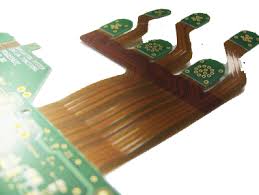
The Importance of Fiducial Marks in Rigid Flex PCBs
There are several key factors that affect the cost of a flex or rigid-flex PCB, including the number of layers, the width of the traces, and the choice of materials. In order to minimize costs, you can reduce the number of layers by using a hybrid-layer structure and by adding copper stubs to the ends of conductive paths. It’s also a good idea to use rounded edges for traces that are expected or designed to be bended, as this will improve the tear resistance compared to squared corners.
PCBway offers a detailed calculator to help you find out how much your specific design will cost. The calculator takes into account the thickness of the copper and the material thickness, as well as the number of layers and the size of the holes. The resulting price can vary depending on your manufacturer’s rules, so it’s a good idea to check with them directly.
Fiducial marks are tiny markers that help manufacturers and engineers determine the precise position of components during assembly. They can be either global or local, and the right one for your PCB depends on the type of assembly machine it will be run by. Global fiducials are larger and more noticeable, and they’re usually used to identify the edge of a surface-mounted component. Local fiducials are smaller and less obvious, and they’re typically used by systems that require more accuracy than global markers can provide.
Generally, the fiducial size is 1 to 3 mm, and the exact size you need will depend on the assembly capabilities of the manufacturer you’re working with. Some manufacturers advise the use of three fiducials placed at the corners of the PCB, as this provides two angular alignment measurements and allows the machine that picks and places to infer the correct orientation.


