

component placement work in circuit board assembly
Like putting together a puzzle, circuit board assembly requires proper component placement to make it work. It’s not just about getting the pieces in the right place; it’s also about ensuring they’re close enough for electrical considerations and positioned optimally for thermal and mechanical requirements. In addition, component placement must be consistent to ensure manufacturability for a successful PCB product.
The circuit board assembly process starts with the application of solder paste to the areas of the board where components will be placed. This is typically done with a stencil to ensure precise application. Next, the components are placed on the paste using a machine known as a pick-and-place device. These machines use a vacuum nozzle to pick up the components and place them on the paste with exact precision. The components can range from small resistors and capacitors to larger ICs and connectors.
It’s important to keep in mind that these machines aren’t perfect, and there are limitations for their placement accuracy. If the components aren’t placed correctly, it can cause issues with electrical connections, signal integrity, and even thermal issues in some cases. To avoid this, it’s a good idea to follow a set of PCB component placement guidelines to ensure that your design works well for both assembly and manufacturing.
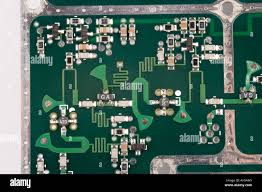
How does component placement work in circuit board assembly?
To increase the speed of the assembly process, it’s best to group similar types of components together on the PCB. This will allow the assembly machine to place these components faster and improve overall efficiency. For example, it’s helpful to group together any components that handle high-speed signals and keep them away from other signals that are not so sensitive. This will help to reduce noise and other interference between these different signals that could affect the performance of the board.
It’s also a good idea to avoid placing components that generate a lot of heat near other, more sensitive, devices. This is because hot components can interfere with the operation of other components, leading to poor signal quality or even overheating. To prevent this, it’s a good idea for designers to reserve sufficient space on the PCB for cooling fans or other devices designed to improve heat dissipation.
Component placement in circuit board assembly has evolved significantly with automation, primarily through the use of pick-and-place machines. These automated systems have revolutionized the assembly process by accurately placing a variety of components onto the PCB. These machines use sophisticated vision systems to identify the exact location of each component, ensuring proper orientation and alignment. With their ability to handle components at high speeds and with great precision, pick-and-place machines have made it possible to assemble boards much faster and more accurately than manual methods could achieve.
Another way to improve the speed of the assembly process is by avoiding redundant pads on the PCB. This can lead to unnecessary steps in the process, which can add up and significantly reduce the assembly time. For this reason, it’s recommended that designers only have a single pad for each connection and avoid having overlapping pads on the same layer of the PCB.


