current breakthroughs in AI agents trading
The field of AI agents trading has seen remarkable advancements in recent years, driven by improvements in machine learning, data availability, and computational power. Understanding the question “What are current breakthroughs in AI agents trading?” involves exploring how these technologies are transforming traditional trading approaches and creating new opportunities in financial markets. Several key breakthroughs have pushed AI agents trading from theoretical research into practical and increasingly reliable applications.
One of the most significant breakthroughs in AI agents trading is the integration of deep reinforcement learning techniques. Unlike traditional models that rely heavily on historical data patterns, reinforcement learning allows AI agents to learn optimal trading strategies through trial and error in simulated environments. These agents dynamically adapt their strategies based on feedback, improving decision-making in complex, uncertain, and fast-moving markets. This adaptability marks a critical shift, enabling AI agents trading systems to better handle non-stationary data and sudden market shocks, which are common in real-world trading scenarios.
Another important breakthrough lies in the use of natural language processing (NLP) within AI agents trading frameworks. By leveraging NLP, AI agents can analyze unstructured data sources such as news articles, social media feeds, and earnings reports in real time. This capability allows trading agents to incorporate sentiment analysis and event-driven signals, providing an edge in predicting market movements influenced by geopolitical events, corporate announcements, or economic reports. The fusion of quantitative data with qualitative insights through NLP greatly enhances the sophistication of AI agents trading systems.
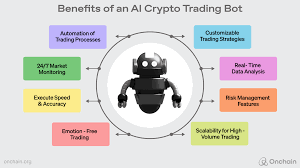
What are current breakthroughs in AI agents trading?
The application of transfer learning and meta-learning techniques has also accelerated progress in AI agents trading. These approaches enable trading agents to generalize knowledge learned from one market or asset class to others, reducing the need for extensive retraining when faced with new environments. Transfer learning helps overcome the problem of limited data in niche markets, while meta-learning equips AI agents with the ability to quickly adapt to changing market conditions. Together, these techniques boost the robustness and scalability of AI agents trading strategies.
Furthermore, advances in explainable AI (XAI) are influencing AI agents trading by making complex decision-making processes more transparent and trustworthy. One criticism of AI agents trading has been the “black box” nature of deep learning models, which makes it difficult for traders and regulators to understand how decisions are made. Breakthroughs in XAI enable developers and users to interpret and validate the rationale behind AI-driven trade recommendations. This increased transparency fosters greater adoption of AI agents trading solutions, especially in highly regulated financial environments.
Real-time data processing and edge computing are also shaping current breakthroughs in AI agents trading. With the explosion of data from exchanges, alternative data providers, and IoT devices, AI agents need to process and react to information in milliseconds. Innovations in hardware acceleration and distributed computing allow AI agents trading platforms to execute complex models at speeds necessary for high-frequency trading and arbitrage strategies. This speed advantage is critical in markets where milliseconds can determine profitability.
Lastly, collaborative and multi-agent systems represent a cutting-edge breakthrough in AI agents trading. Instead of single agents working in isolation, multiple AI agents can collaborate, compete, or negotiate within a shared environment, simulating realistic market dynamics. These systems provide deeper insights into emergent market behaviors and improve the resilience of trading strategies through diversity and cooperation. Multi-agent frameworks mirror real-world trading ecosystems and enhance the fidelity of AI agents trading simulations.
In summary, the breakthroughs currently shaping AI agents trading include reinforcement learning, natural language processing, transfer learning, explainable AI, real-time data processing, and multi-agent collaboration. These advances are making AI agents trading more adaptive, insightful, transparent, and efficient. As these technologies continue to evolve and integrate, the future of AI-driven trading looks increasingly promising, offering novel tools and strategies that could redefine financial markets.