

Impact of Ceramic Printed Circuit Boards
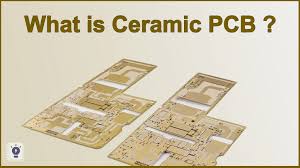
Ceramic Printed Circuit Boards, also known as ceramic substrates, are a type of PCB used for high-end applications such as Hybrid Microelectronics and power modules. They are more expensive than other PCBs but offer better comprehensive performance, especially in terms of heat dissipation and insulation. These properties make them a good choice for applications that require superior durability and reliability. When shopping for ceramic PCBs, make sure to look for a company that is committed to industry standards and has robust quality control processes. Also, ask about their certifications to ensure they meet your specific requirements.
The main reason why ceramic PCBs are more expensive than other types is that they are made from alumina, which is a highly abrasion-resistant material. The material also has high thermal conductivity, which is why it can dispel heat more efficiently than other materials. This makes it a good option for high-power electronic devices that need to operate under high temperatures and in demanding environments.
To manufacture a ceramic printed circuit board, copper foil is attached to the ceramic base using a special bonding technology. A fabricator then prints a circuit pattern on the metal foil using photo-lithography techniques, then chemically etches away the unprotected copper areas to form the via holes. The via holes are then filled with silver or gold, which increases conductivity and prevents oxidation. The fabricator then uses a medium or low power RF CO2 laser to cut the circuit boards into different shapes and sizes.
The Impact of Ceramic Printed Circuit Boards on Electronic Waste
Alumina ceramic is the most common type of ceramic used for PCBs. It has the advantage of having a low thermal expansion coefficient, meaning it doesn’t change shape as much when exposed to heat. It also has good mechanical strength and electrical insulation, making it an ideal choice for applications with a lot of voltage. Alumina ceramics also have excellent corrosion resistance and can withstand a wide range of environmental conditions.
In addition to being more durable and reliable than other types of PCBs, ceramics have good electrical conductivity. They can be made with various doping to adjust their electrical conductivity, so they are suitable for a variety of applications. However, they are not as rigid as other substrates, which can be an issue in some cases.
Currently, there are several methods of recycling WPCBs. These include an informal sector focused on precious metals recovery using highly polluting approaches, and industrial pyrometallurgical processes for the calorific value of WPCBs. Unfortunately, only 30% of the chemical elements present in WPCBs are actually recycled [5].
Advanced recycling strategies focus on the disassembly and sorting of ECs (Electronic Components) to dramatically improve their recovery rate. This is an alternative to traditional WPCB treatment methods, which involve manual removal of high-value components and then raw crushing the rest, with only 30 wt% of the main elements being recovered in post-processing wastes or ashes.


